“Why Am I Seeing This Ad?”: What Meta Tells People, And How To Reduce Pushback
Published · 5 min read
Reviewed by Alex Makarov, CEO & Founder, IN-STORE
Meta is adding more ML detail to “Why am I seeing this ad?” and easier access to Ads Preferences. Here is how to reduce pushback.
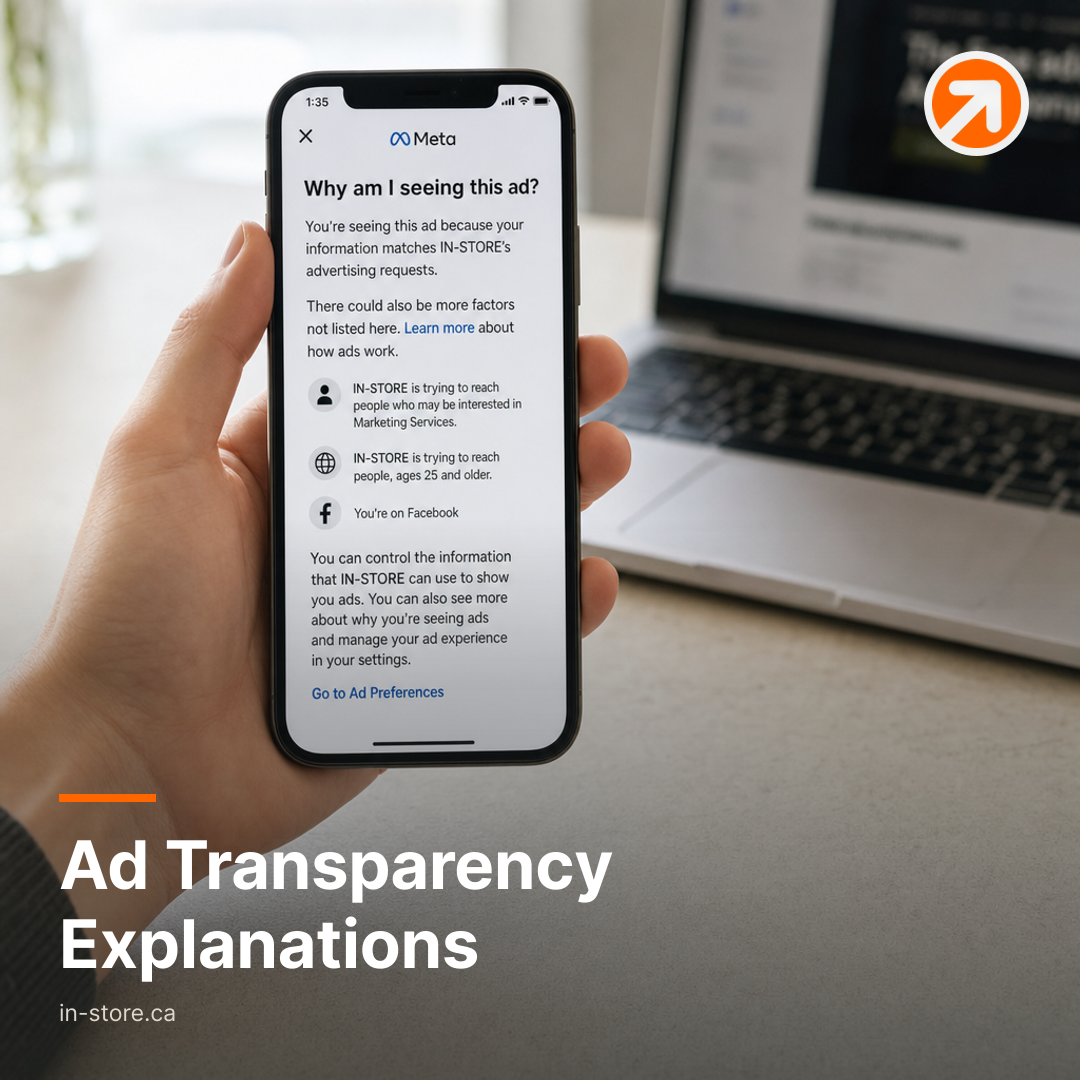
What Meta Shows In “Why Am I Seeing This Ad?”, And How To Cut Negative Feedback
If you run Meta ads for a service business, the fastest path to wasted spend is often simple: the people you want to reach feel surprised, confused, or even irritated by why they were targeted. Meta’s “Why am I seeing this ad?” and Ads Preferences are where that reaction forms.
Meta has shared more detail about how it explains ad delivery. For owners and lean marketing leads, this is a practical signal to tighten targeting choices, align the landing page with the promise in the ad, and reduce the kind of negative feedback that can drag on performance over time.
What Meta Now Puts In Front Of Users
Meta says it is increasing ads transparency by updating what people can see in “Why am I seeing this ad?”, adding more detail related to machine learning, and making it easier to access Ads Preferences.
For a small business advertiser, this matters because a user’s first instinct is to look for a reason that feels personal or “too close.” When the explanation feels vague, or feels mismatched with what the person believes about themselves, it can trigger negative feedback and reduce receptivity to your offer.
The Targeting Levers Most Likely To Trigger Questions
Meta’s transparency direction changes how you should think about audience inputs. Your goal is to keep the targeting story simple enough that a normal customer can accept it without feeling tracked or mischaracterized.
Interest And Demographic Inputs
If your ad hinges on a sensitive or ambiguous angle, the “why” explanation can become the moment that creates distrust. Keep the offer and the audience definition aligned with what the customer would reasonably expect from your business category and what the ad actually says.
Machine Learning Delivery
Meta’s added machine learning detail points to a key operational reality: even when you start with clean audience logic, delivery can still be shaped by how people respond to the ad. That makes early signals important. An ad that attracts the wrong kind of curiosity can train delivery toward low intent attention that looks cheap in-platform but performs poorly in leads.
Reels Placement Expectations
When your ads show up in placements like Facebook Reels ads, users tend to be in a different mindset than a feed scroll that already includes local business content. If your creative reads like a hard sell with no context, it can stand out in the wrong way and raise the “why am I seeing this” reaction.
How To Reduce Negative Feedback On Ads
The practical goal is to reduce mismatch between the user’s understanding of themselves and the targeting story Meta surfaces. Your best tools are clarity, relevance, and the discipline to avoid “clever” targeting that cannot be explained in plain language.
Write The Ad As If The User Will Question It
Assume a portion of your audience will open “Why am I seeing this ad?” and look for a justification. Make the first line of your ad and the first screen of your landing page answer the natural question: “what is this, and why is it for me?” When that alignment is tight, the transparency panel becomes a reinforcement rather than a surprise.
Keep The Targeting Story Clean
Choose targeting inputs that reflect real service intent rather than broad curiosity. In practice, that often means building from clear service categories and customer needs, then letting creative do the filtering. When you need help with this, IN-STORE positions audience research as a system input that ties together ads, content, and lead capture so the same message shows up consistently across touchpoints.
Design For “Right Person, Right Expectation”
Negative feedback is often less about the offer and more about the framing. A user who expects general content and gets a direct “book now” pitch may react harsher than someone who sees an educational angle first. Small service businesses can use a two step structure: an ad that sets context, followed by a landing experience that makes the next step obvious and low friction.
Watch For Second Order Effects In Delivery
Here is the non-obvious trade off: optimizing aggressively for low cost results can pull delivery toward people who interact a lot, including people who question or complain about relevance. Meta’s machine learning detail reinforces that feedback loops exist. If you see comments and reactions drifting negative, it can be a signal to tighten the promise, narrow the message, or shift creative before you scale budget.
Where IN-STORE Fits For Lean Teams
For owners who need steady lead flow without building an in house team, the operational fix is to treat ads transparency as part of your SMB growth systems. Branding and messaging sets what you want to be known for, audience research keeps targeting explainable, and your web presence makes the next step feel consistent with the ad. If paid support is needed, Google Ads management can run alongside Meta so your lead capture does not depend on one channel’s delivery dynamics.
For a monthly marketing partner, this is the kind of detail that protects performance over time: fewer mismatches, fewer negative reactions, and cleaner inputs that keep your campaigns easier to manage.
Meta’s direction is clear: users will see more about why ads reach them, and they will have easier access to the controls that shape what they see. The businesses that win are the ones whose targeting and message remain easy to explain in one sentence.
If you want help tightening your targeting logic and aligning ads with your lead capture flow, start with IN-STORE’s monthly marketing services.
Source: Meta: Increasing Our Ads Transparency
More articles from IN-STORE · This article as Markdown · RSS