ChatGPT Sponsored Agents: A Practical Intake And HubSpot Tagging Playbook
Published · 6 min read
Reviewed by Andrew Liashok, Client Service Director, IN-STORE
A practical playbook for ChatGPT Sponsored Agents: when to hand off to humans, what intake to automate, and how to tag leads in HubSpot.
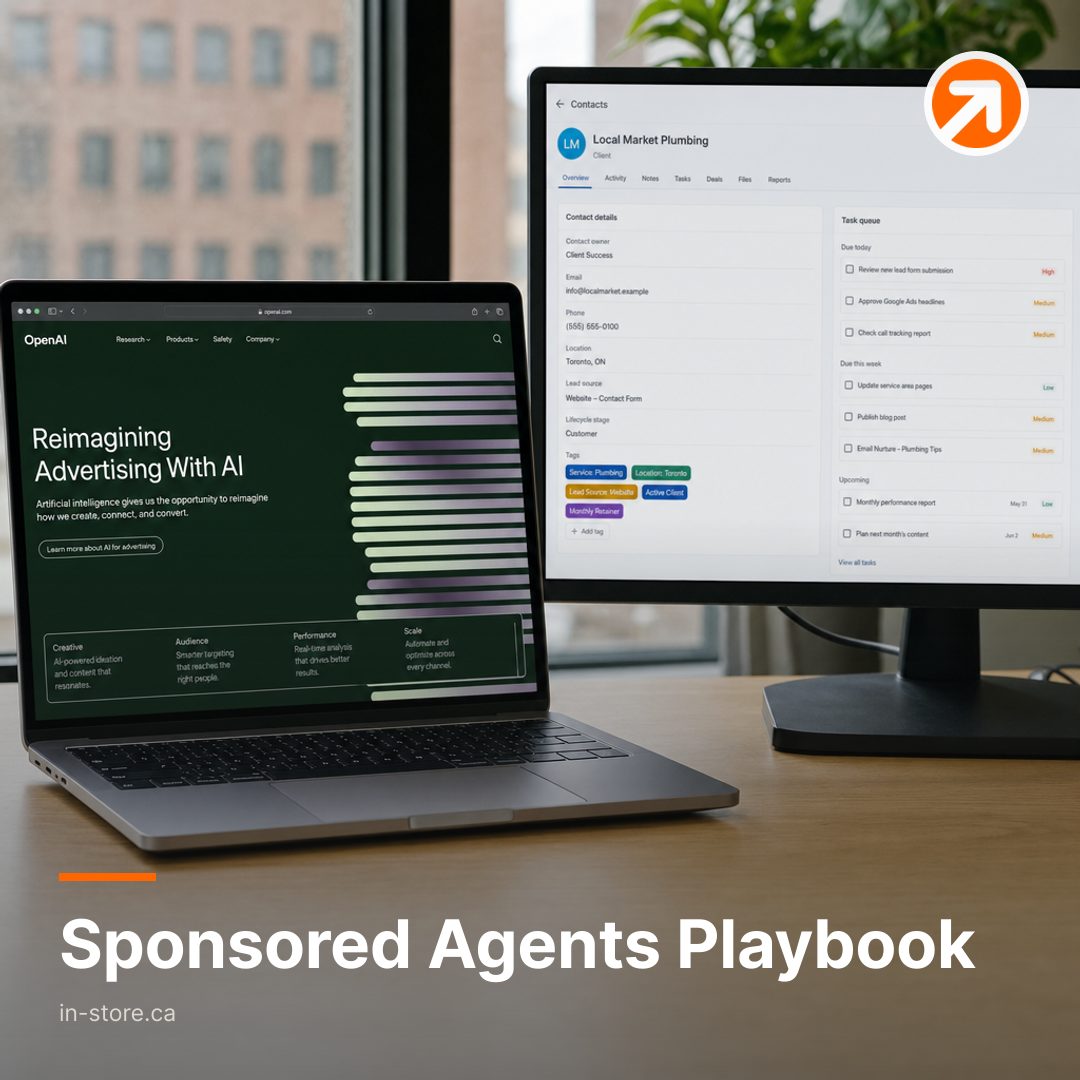
How Service Businesses Can Route Chats, Automate Intake, And Tag Leads For Follow Up
When a new ad format turns the first click into a live conversation, your lead flow can improve or break based on what happens in the first five messages. For GTA service businesses, the operational question is simple: which conversations should stay automated, and which ones need a human handoff before you waste time on the wrong jobs or miss the right ones?
OpenAI has outlined a direction for “Sponsored Agents” as part of “reimagining advertising with AI.” The immediate takeaway for owners and lean marketing leads is not the ad creative. It is the intake design: what you ask, how you route, and how you tag and follow up so the conversation becomes a booked job, not a dead chat.
What Sponsored Agents Change In Lead Handling
Sponsored Agent conversations shift the top of the funnel from a landing page to a dialogue. That changes the work your marketing system has to do. Instead of optimizing for a form fill, you are optimizing for a clean handoff from chat to scheduling, quoting, or a sales call.
The operational risk is subtle: a conversational ad can generate more “almost leads,” where the prospect feels engaged but never reaches a decision point. Your job is to design the conversation so it reaches one of two outcomes quickly: a qualified handoff to a human, or a polite exit with enough tagging to support later follow up.
Design Goal: Fast Clarity, Clean Routing
For service businesses, the conversation has to do four jobs in order: identify the service, confirm fit, capture contact information in a usable form, and move the prospect to the next step. If any of those steps are vague, your follow up team inherits confusion instead of momentum.
When To Route Sponsored Agent Chats To A Human
The best handoff rules are based on intent and complexity. You route to a human when the chat reaches a decision point that benefits from judgment, reassurance, or negotiation. Keep the automated path for straightforward inquiries that match your most common jobs.
Human Handoff Triggers For GTA Service Businesses
- Price and timing pressure: the prospect asks for a quote, availability, or urgency cues that suggest the next message should propose a call, site visit, or booking.
- Job complexity: the prospect describes something that needs diagnosis, on site assessment, multiple services, or constraints that change scope.
- Location nuance: the prospect is outside your core service area, or asks about a neighborhood, building type, or access conditions that affect feasibility.
- Decision maker mismatch: the prospect indicates they need approval from a partner, property manager, or head office, which often changes how you present next steps.
- High value intent signals: they mention a specific date, a specific problem, or a clear outcome they want, which is where a human can convert speed into a booked job.
How To Structure The Handoff Moment
A handoff works best when the chat passes three items to the human: what the customer wants, why they want it now, and what the next step should be. In practice, that means the automated part of the conversation should summarize the situation in one short internal note that your team can act on immediately.
Keep the customer experience simple. The chat should set expectations about how the handoff will happen and what the prospect should do next, such as confirming the best contact method or choosing a time window for a call.
What Intake Questions To Automate
Automated intake should collect the pieces of information your team asks every time, and that do not require judgment to capture. The goal is consistency. You want every lead to arrive with the same minimum dataset so you can sort, score, and respond with speed.
A Practical Automated Intake Set
Start with questions that map directly to routing and follow up:
- Service needed: align to your service menu so your follow up can use a relevant script and next step.
- Location: capture city and neighborhood level detail that helps route to the right crew or office.
- Timeline: identify whether they need help immediately or are planning ahead.
- Context that affects scope: property type, access constraints, or any detail you routinely use to decide whether a visit is required.
- Contact preference: phone or email, plus the specific details needed to reach them.
Where Automated Intake Should Stop
Automated intake should stop before you risk misquoting, overcommitting on availability, or giving advice that depends on site conditions. The chat can gather facts and suggest next steps, while the human does the judgment work.
How To Tag Sponsored Agent Leads In HubSpot
Tagging is where conversational ads either become manageable or become noise. The point of tags is not reporting aesthetics. Tags determine which leads get called first, which sequences they enter, and how you learn what the chat is producing over time.
A Tagging Framework That Supports Follow Up
Use tags that reflect how your business actually operates. The goal is to make the next action obvious to whoever opens the record.
- Source tag: tag as Sponsored Agents so you can separate these conversations from web forms, referrals, and other channels.
- Service line tag: map to your internal service categories so routing goes to the right person quickly.
- Intent tag: set a simple intent level based on the conversation, such as quote request versus exploratory question.
- Timeline tag: group leads by urgency so your team can prioritize call backs.
- Fit tag: mark in area versus outside area, and any other binary fit rules your operations team relies on.
Second Order Effect: Tags Protect Your Sales Team Time
Conversational ads can create a lot of dialogue that feels productive but has low booking probability. A disciplined tagging system prevents your team from spending prime call time on leads that never asked for a next step. It also gives you a clean way to build separate follow up motions for high intent chats versus early stage questions.
Owners feel this quickly. Without tags, every conversation turns into a custom read and reply. With tags, follow up becomes a queue with clear priority rules.
Putting It Into A Weekly Operating Rhythm
A workable rhythm is simple: review new Sponsored Agents conversations, confirm that each one has minimum intake fields, assign the human follow up route, and ensure tags are applied consistently. The goal is to keep the system from drifting as new services, seasons, and promos come and go.
If you want this to run without heavy internal effort, treat it as part of an SMB growth system: intake design, lead capture, tagging logic, and a follow up workflow that lives in your CRM. When these parts are managed together, content and local visibility push prospects into a conversation that closes the loop cleanly.
Sponsored Agent conversations reward businesses that treat chat as structured intake, not free form messaging. Define the handoff triggers, keep automated questions limited to repeatable basics, and make HubSpot tags determine the next action.
If you want a monthly marketing partner to build and operate this as one system, IN-STORE can help through its lead generation systems and follow up workflows.
Ready to build a Sponsored Agent intake and follow-up system? Contact IN-STORE to get started.
Source: OpenAI: Reimagining Advertising With AI
More articles from IN-STORE · This article as Markdown · RSS